
Built Into the Building
How We Made the Sound System Disappear Inside Washington National Cathedral

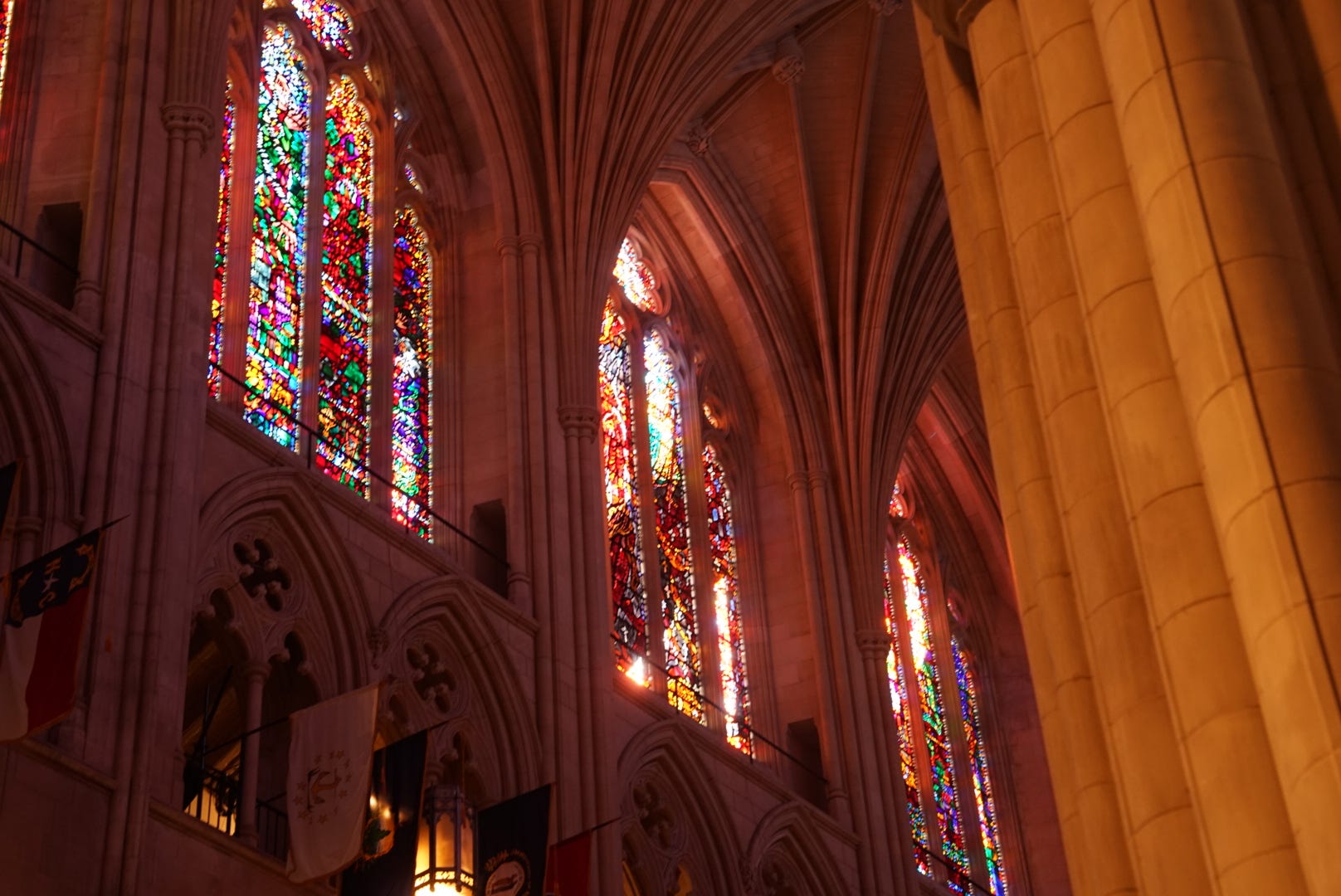
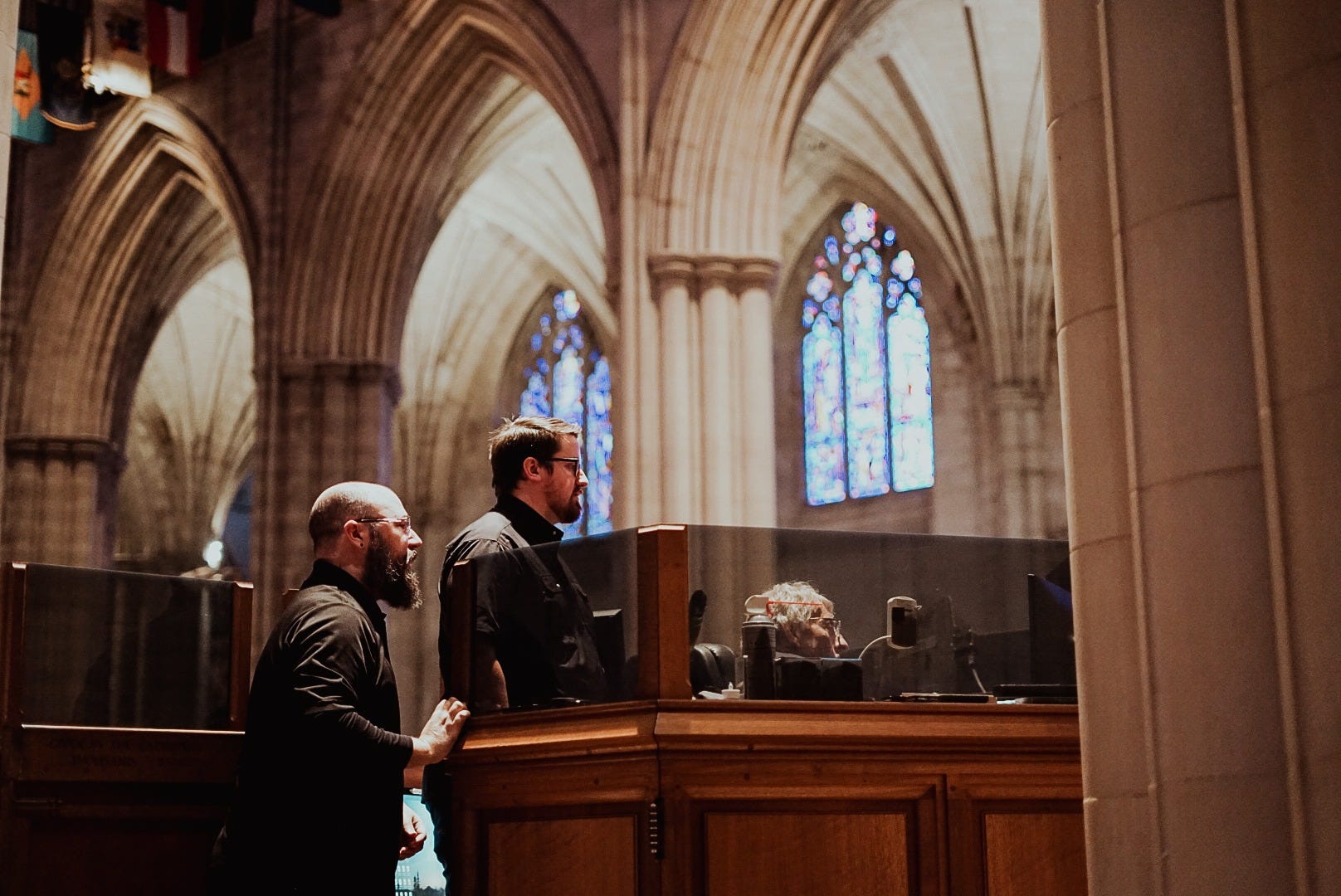
The Washington National Cathedral stands as a beautiful example of Gothic architecture and engineering excellence. Every stone arch across the over 500-foot nave was meticulously crafted over nearly a century of construction. Enormous stained-glass windows pull natural light deep into the cavernous space and throw color across the stone in every direction. The space feels alive before you even find a pew.
When asked to bring amplified sound into a historic space like that, the first question is not what speakers to use. It is whether you can do it without leaving a mark.
Protecting Architectural Integrity
Adding modern loudspeakers to a National Historic Landmark is daunting on paper. Surface-mounted conduit is not an option. Exposed cabling is not an option. Anything that reads as a modern intrusion into the uninterrupted stone and stained glass is a non-starter.
Reframing that challenge was essential. Preserving the architectural integrity of the space forces you to think about infrastructure in a fundamentally different way. The constraint has to become less of a limitation and more of a creative brief.
Invisible Infrastructure
The most labor-intensive portion of the project had nothing to do with audio.
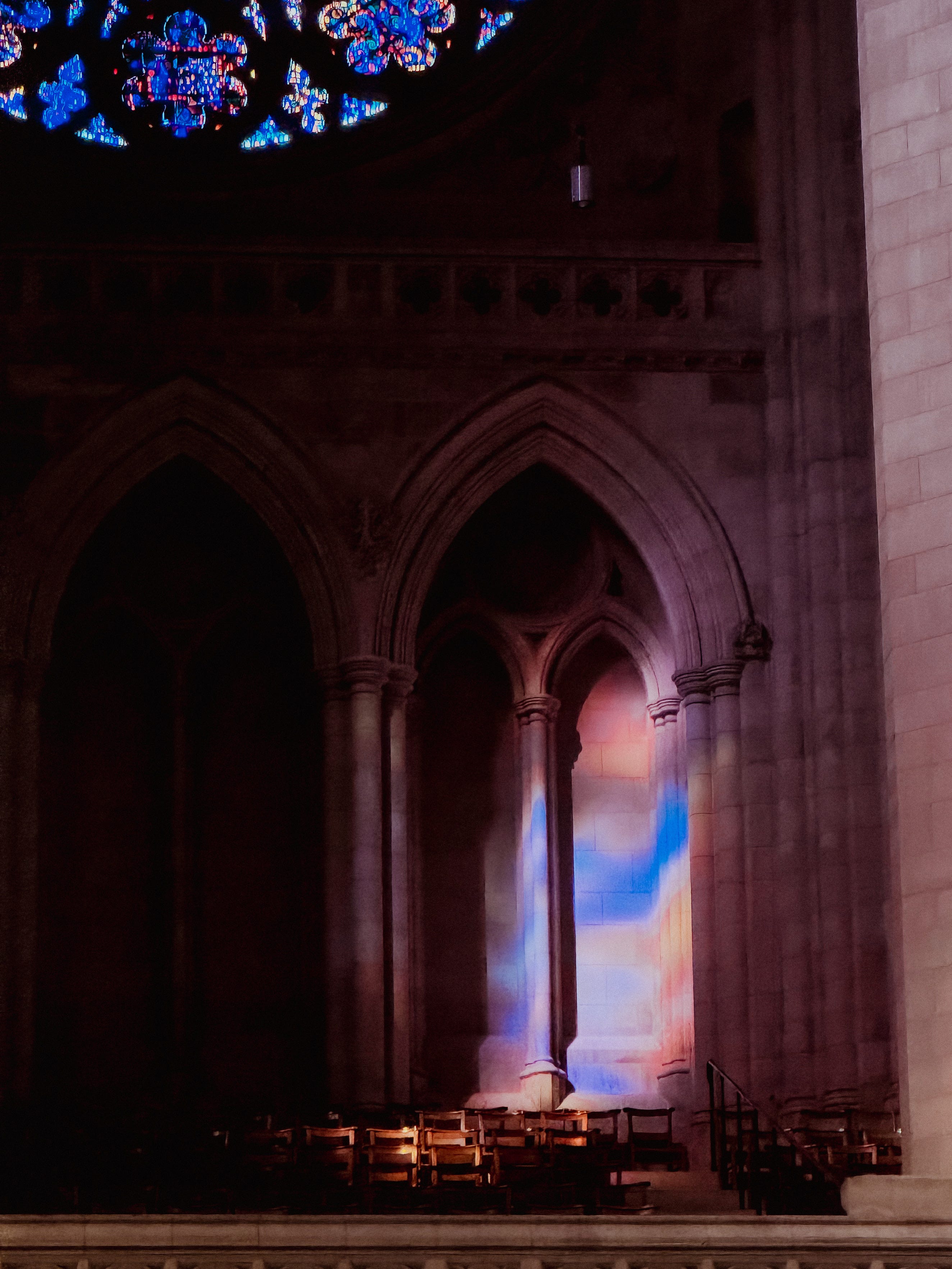
To get signal to each of our 67 discrete speaker locations throughout the nave, we needed to run cabling through the walls. In a conventional installation, that means conduit. At the Cathedral, it meant working directly with the building’s full-time stone masons to carefully cut away grout between limestone blocks, creating cable raceways to each individual location by hand.
Once the cables were pulled and pressed into the newly created gaps, the masons grouted over them, permanently sealing the infrastructure into the structure of the building. No exposed runs. No surface-mounted hardware. Just stone, the same as it has always been.
Weeks of meticulous work that most projects would never require and most clients would never notice, and that was exactly the point.
Speakers or Stone
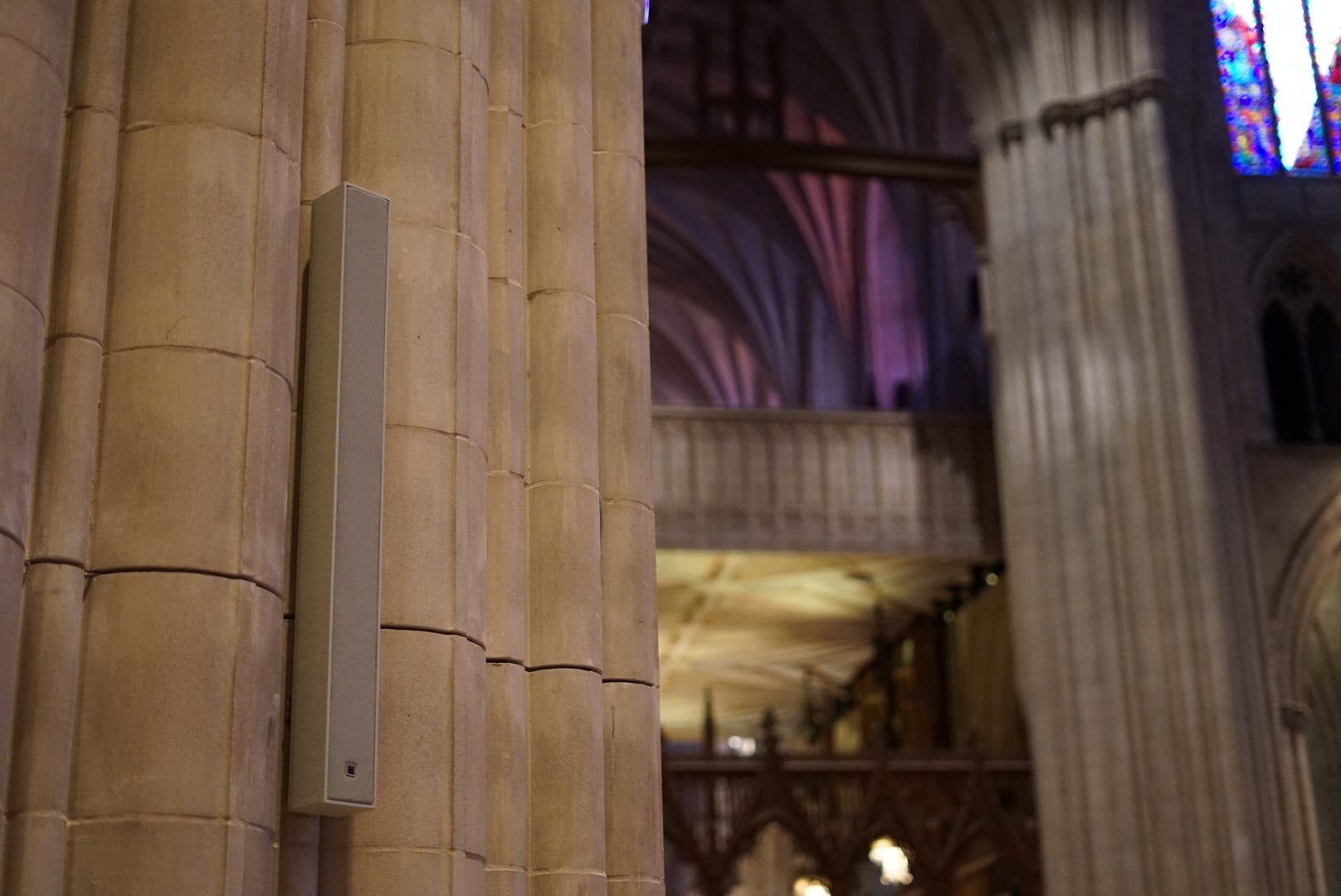
The distributed sound reinforcement system throughout the nave uses the L-Acoustics Soka column loudspeaker. This ultra-shallow enclosure fits naturally into the curvature of the stone columns and provides excellent coverage with almost no visual footprint.
Color was an equally important consideration. Lucky for us, L-Acoustics offers custom-colored speaker enclosures from a wide selection of RAL color options. After carefully working through the available choices, we selected a color that closely matches the Indiana limestone surfaces where each speaker is mounted.
Between the shallow enclosure and the color match, most visitors walk right past them. They are looking at the sprawling stone columns, not the speakers mounted to them. That is exactly what we were after.
The Main Arrays
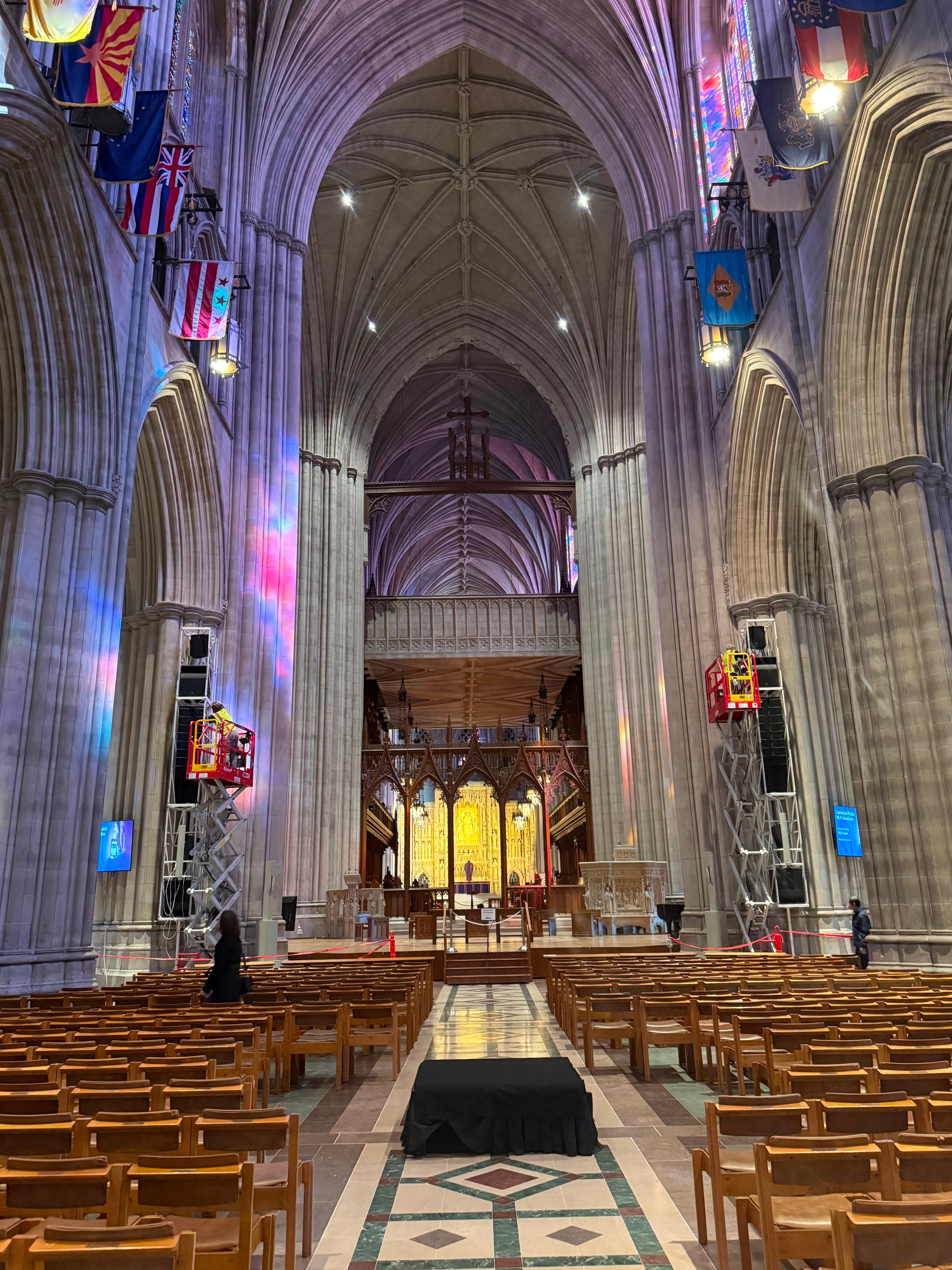
The front-of-nave arrays presented an entirely different challenge. The Soka works beautifully as a distributed element, but the system needed a primary source to anchor the audio image to the stage and carry the full-range weight of the musical program.
The L-Acoustics Kiva II was the right choice for that role. Its audio quality to size ratio is exceptional, which meant we could get the performance we needed within the physical constraints we had. We paired the Kiva II arrays with the L-Acoustics KS21 subwoofer for full-range energy during musical programs.
The arrays were then enclosed in a carefully shaped column structure and wrapped with color-matched, acoustically transparent fabric. Standing anywhere in the nave, what you see looks like part of the building. The arrays are there, doing their job, and almost entirely out of sight.
Conclusion
There is an alternate version of this project where the audio system performs well, but the building pays for it visually. Exposed hardware, visible cable management, speakers that announce themselves from across the room. It would have been faster. It would have been cheaper. It would have been wrong.
The Cathedral called for something harder, and the right response was to meet that standard rather than negotiate it down. Every element of the system, from the cable sealed into the grout lines to the RAL-matched enclosures to the fabric-wrapped arrays, was designed to serve the architecture first and the audio second.
The audio is excellent. The building looks untouched. At the Washington National Cathedral, this is the only outcome worth delivering.
Riley Watson is a AV system design engineer and the founder of AV Edge, a professional AV equipment rental marketplace connecting production professionals with rental providers across the United States. He has led system design on projects ranging from touring production to permanent installation in some of the country's most demanding acoustic environments. Photography by Savanna- Dust & Wonder.